A corporate video can do far more than introduce a company. When properly planned, it can strengthen brand perception, communicate leadership, support sales, attract investors, engage employees and give potential clients a clearer reason to trust your business.
The problem is that many corporate video projects begin with a simple request: "We need a company video."
That is not enough.
Before the cameras come out, important decisions must be made around the purpose, audience, message, story, locations, people involved, production schedule and how the finished film will be used.
For businesses planning a corporate video in Nigeria, good planning is particularly important. The quality of the final film is influenced long before the first frame is recorded.
Start With the Purpose, Not the Camera
The first question should not be, "What camera are we using?"
It should be: "What does this video need to achieve?"
A company looking to attract investors may need a very different film from one trying to win new customers. An organization communicating internally has a different objective from one presenting itself to international partners.
The purpose should determine the creative approach.
A company profile may focus on the organization's history, capabilities and achievements. An executive video may centre on leadership and credibility, while a corporate documentary may use deeper storytelling to communicate the company's impact.
The clearer the objective, the easier it becomes to make the right production decisions.
Define Who the Video Is For
A corporate video should have a specific audience.
Trying to speak to everyone often produces a film that says a lot but communicates very little.
Consider who will watch it. Is it a potential client, procurement team, investor, employee, government stakeholder or international partner?
Once the audience is clear, the tone and message become easier to determine.
A senior executive audience may require a concise and authoritative presentation, while a customer-facing film may benefit from stronger storytelling and emotional connection.
The audience should influence the video from the beginning, not after production has started.
Decide What the Audience Should Remember
One of the biggest mistakes in corporate videos is trying to say everything.
Your company may have decades of history, numerous products, hundreds of employees and countless achievements. Your audience does not need all of it.
Decide what you want people to remember after watching.
It could be your expertise, scale, people, track record, innovation or the problem your organization solves.
A good corporate video is not necessarily the one with the most information. It is the one that communicates the right information clearly and memorably.
Choose the Right Format
"Corporate video" can mean several things.
A company profile can introduce an organization's capabilities and culture. A corporate documentary can explore the business through interviews, real-life situations and deeper storytelling. An executive interview can place leadership at the centre, while a brand film can communicate identity and values through a more cinematic approach.
There is no universally correct format.
The right choice depends on what the business is trying to accomplish. In some cases, combining formats can produce an even stronger film by bringing together the clarity of a profile with the storytelling of a documentary.
Develop the Story Before the Shoot
This is where a corporate video becomes more than a collection of interviews and office shots.
Instead of simply saying that a company is "a leading provider of innovative solutions," show the problem it solves. Show the people doing the work. Show the environment, expertise and human side of the organization.
The script or creative treatment should establish what the audience will see, hear and understand throughout the film.
It should also determine which people need to be interviewed, what questions they need to answer, and which parts of the story should be communicated visually rather than through narration.

Plan Your Interviews Carefully
Executive interviews can make or break a corporate film.
Even experienced executives can struggle when asked to simply "talk about the company." Strong interview preparation goes deeper.
Questions should encourage genuine answers rather than rehearsed corporate statements. Instead of asking, "Tell us about your company," explore why the company was established, what problem it set out to solve, what has changed and where the organization is heading.
The strongest moments often come from answers that sound natural rather than memorized.
Plan Your Locations and Schedule
Your office, factory, construction site or facility may be important to the story, but having access to a location does not automatically make it suitable for filming.
Lighting, sound, background activity, available space, power, access and movement all need to be considered.
In Nigeria, logistics make this even more important. Traffic, weather, security requirements, access restrictions and movement between locations can affect a production schedule significantly.
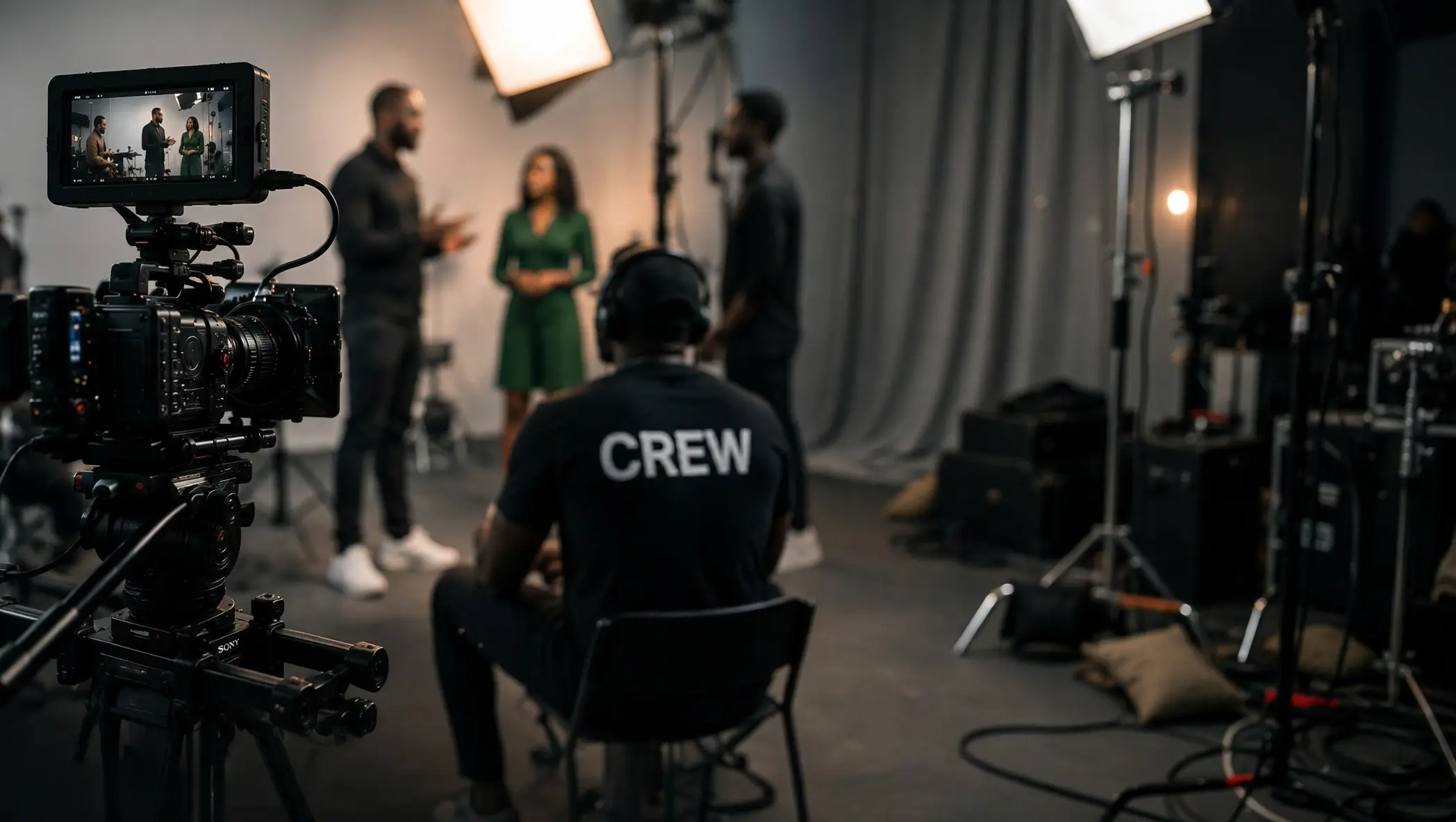
A professional schedule should allow enough time for setup, lighting, sound checks, interviews, scene changes and movement between locations.
This is particularly important when senior executives are involved. Their time is valuable, and the production should be organized around it.
Think About Production Quality Before You Shoot
A premium corporate video is not created simply by using an expensive camera.
Production quality comes from the combination of cinematography, lighting, sound, directing, composition, editing, colour grading and storytelling.
Sound deserves particular attention. A beautifully composed interview with poor audio will still feel unprofessional.
The equipment matters, but how it is used matters more.
Plan for How the Video Will Be Used
Before production begins, decide where the finished film will appear.
Will it be used on your website, LinkedIn, YouTube, sales presentations, conferences, investor meetings or internal communications?
These decisions can influence the production itself.
You may need different versions, durations or aspect ratios for different platforms. Planning this early can save time during post-production and make the final content more useful.
Give Post-Production the Attention It Deserves
Filming is only one part of the process.
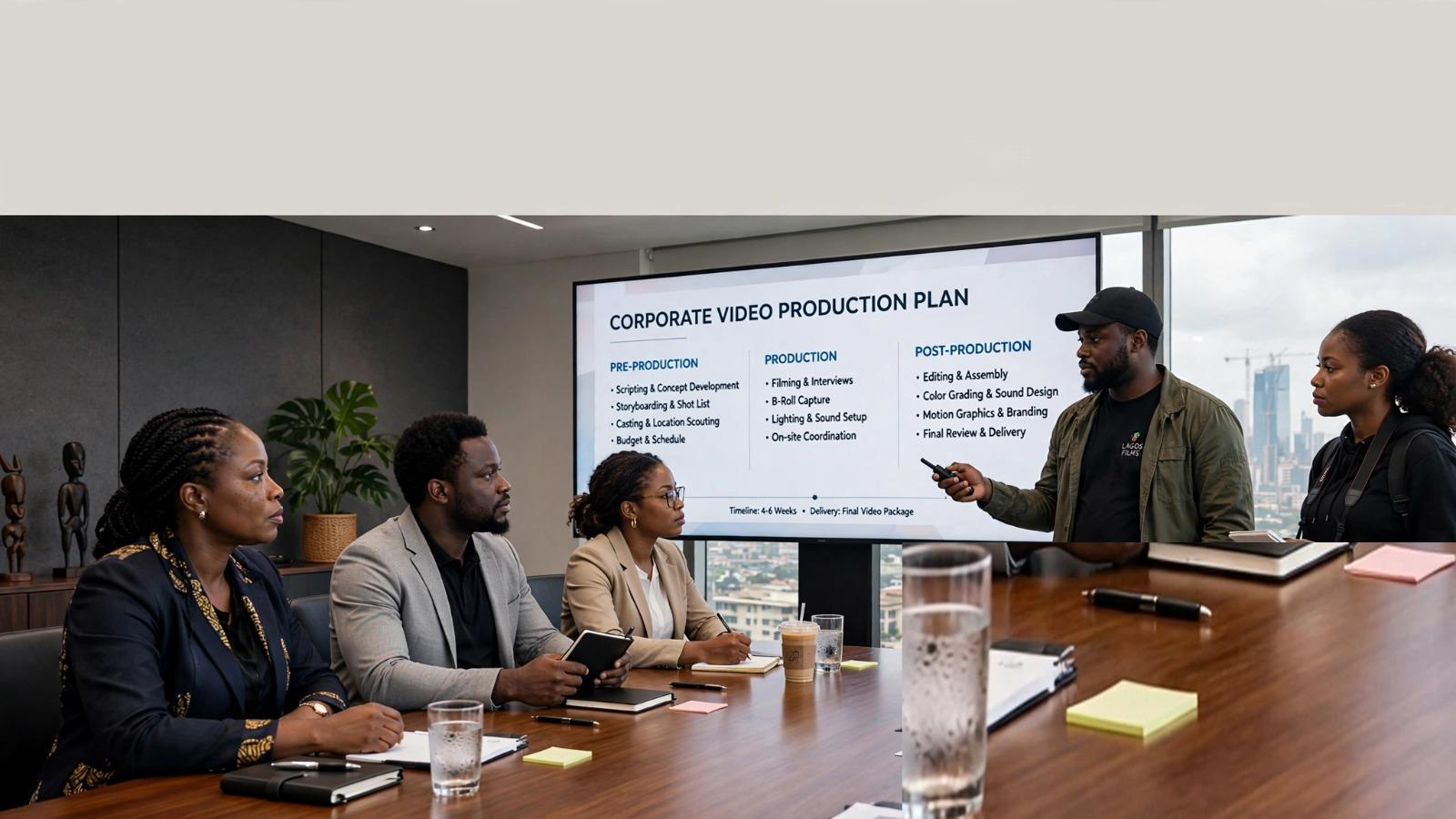
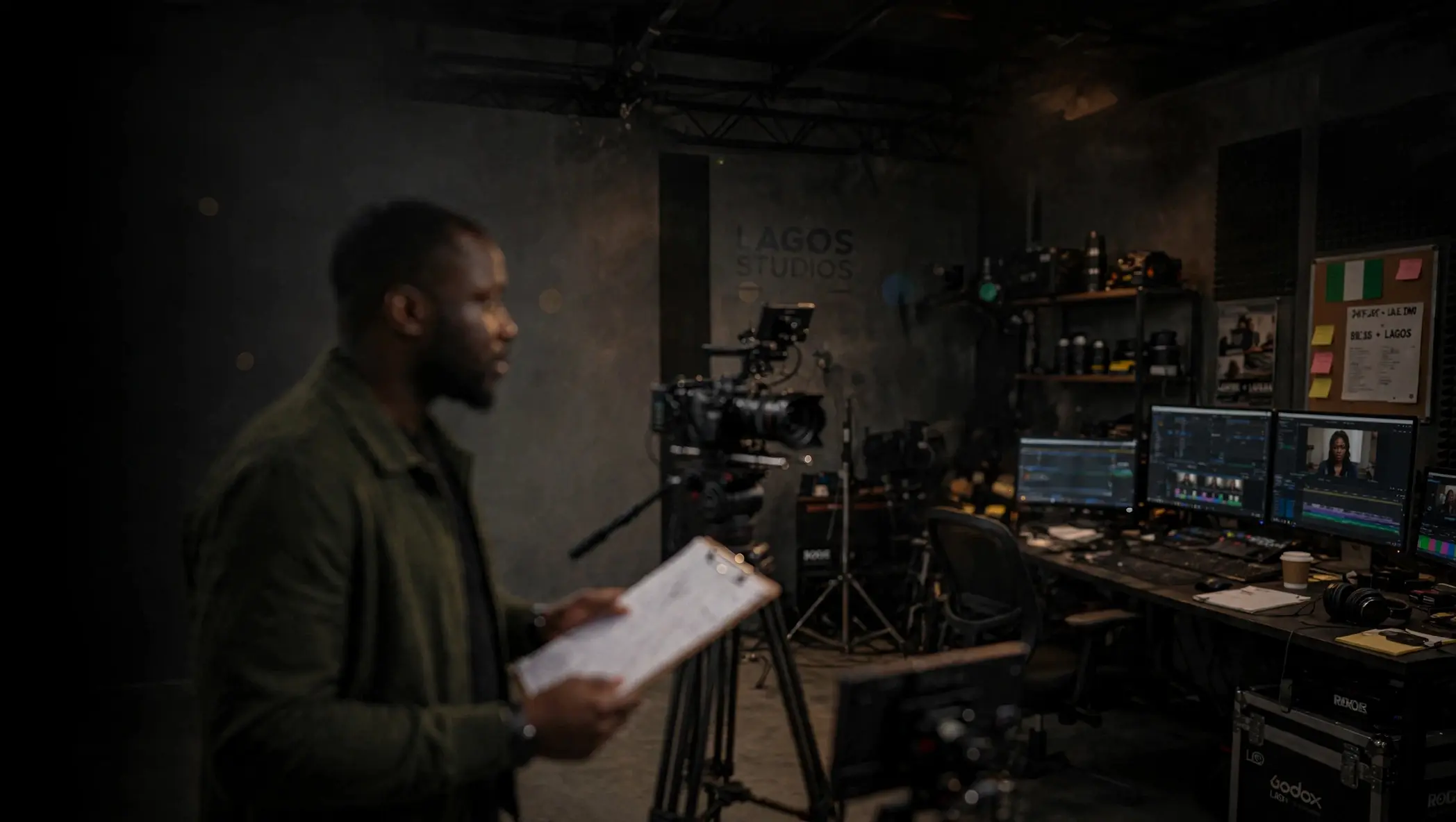
After the shoot, footage needs to be reviewed and shaped into a coherent story. Interviews are selected, supporting footage is assembled, graphics are developed where necessary, and the film is refined through editing, colour grading, sound design and final mixing.
Corporate video production should therefore be treated as an end-to-end process, not simply a filming exercise.
At Criptonx Studios, our process moves from consultation and concept development through pre-production, filming, post-production and final delivery.
Don't Let the Budget Be the First Conversation
Budget is important, but it should come after the scope has been understood.
A simple one-location interview is very different from a multi-location corporate documentary involving several executives, extensive B-roll, drone filming, multiple shooting days and complex post-production.
The better question is not simply, "How much does a corporate video cost?"
It is, "What do we need this video to accomplish, and what level of production is required to accomplish it properly?"
Once the scope is clear, the budget can be built around the actual requirements.
Choose a Production Partner That Understands the Business
The production company you choose should do more than operate cameras.
They should understand your business objective, challenge weak ideas when necessary, develop the right creative approach, anticipate production problems and translate your message into something an audience can understand.
A technically good video with a weak message is still a weak corporate film.
The strongest productions bring together strategy, storytelling and production discipline.
Final Thoughts
Planning a corporate video in Nigeria does not need to be complicated. It simply needs to be deliberate.
Start with the objective. Define the audience. Establish the message. Choose the right format. Develop the story. Prepare the interviews. Plan the locations and schedule. Think through production quality and distribution before the cameras roll.
The quality of a corporate video is determined long before the final edit.
When the planning is right, production becomes more controlled, creative decisions become clearer and the finished film has a much better chance of doing what it was created to do: communicate the business clearly and leave the right impression.
At Criptonx Studios, we help businesses and organizations across Nigeria plan and produce corporate videos, company profile films, executive interviews, internal communication videos and corporate documentaries, combining structured production with strong storytelling and professional visual execution.
Planning a corporate video? Start with the objective, not the camera.