Corporate Videos
Corporate Video Production in Lagos: A Complete Guide for Businesses (2026)
Learn how corporate videos help brands communicate effectively, build trust, and drive engagement across multiple platforms.
7 min readRead Article→
Corporate Videos
If your company is considering investing in professional video production, you may have come across two terms that often seem interchangeable: company profile video and corporate documentary.
They are not the same.
Both formats can showcase your organisation, communicate your capabilities and strengthen your brand image, but they approach storytelling differently. Choosing the right format can determine whether your final video simply explains what your company does or gives your audience a reason to remember, trust and engage with your business.
For businesses in Lagos and across Nigeria, this distinction matters. A manufacturing company preparing for investor presentations may need a very different film from an established organisation celebrating 20 years in business. A growing technology company may need something different again.
So, which one does your business need?
Let's break it down.
A company profile video is a professionally produced video designed to introduce an organisation, explain what it does, showcase its capabilities and communicate its value to a specific audience.
Think of it as your company's visual introduction.
A strong company profile video typically communicates who the company is, what it does, its products or services, capabilities, facilities, leadership, experience, achievements, values and future direction.
The primary objective is usually clarity, credibility and positioning.
Someone who has never encountered your company should be able to watch the video and come away with a clear understanding of who you are, what you offer and why your organisation matters.
This makes company profile videos particularly useful for corporate websites, sales presentations, conferences, investor meetings, social media, business development and stakeholder communications.
A corporate documentary goes beyond explaining what a company does. It tells the story behind the organisation.
Instead of simply presenting facts, a documentary-style corporate film can explore the company's journey, people, challenges, milestones, transformation, impact and ambitions.
The storytelling is generally more human and narrative driven.
For example, rather than simply saying, "Our company has operated for 10 years and serves customers across Nigeria," a documentary approach might explore where the company started, the challenges it faced, what changed along the way, the people responsible for that journey, the impact the organisation has made and where it is heading next.
This creates a very different viewing experience.
A corporate documentary can be particularly powerful for anniversaries, major milestones, founder stories, manufacturing businesses, institutions, organisational transformation, impact organisations and companies with a meaningful history.
The simplest way to understand the difference is this:
A company profile explains the business.
A corporate documentary tells the story of the business.
A company profile is generally structured around information and positioning, while a corporate documentary is structured more heavily around narrative and emotion.
That does not mean a company profile should be boring or that a documentary cannot communicate business information. The two formats can overlap considerably.
The real difference is how the information is presented and what the audience is expected to take away from the experience.
Imagine a potential client visits your website and has never heard of your organisation.
They want answers.
Who are you? What do you do? What products or services do you offer? What industries do you serve? What facilities or capabilities do you have? Why should we trust you?
A company profile video can answer those questions efficiently.
Its structure might move from an introduction and company overview into products or services, capabilities, operations, leadership, achievements and vision before arriving at a clear closing message.
The storytelling is purposeful and controlled.
This makes the format particularly useful when the primary objective is business communication and positioning.
A documentary can take the same information and turn it into a story.
Instead of opening with a list of services, it may begin with a person, a moment, a challenge or a significant event.
For example: "When we started, we had three employees and one small facility."
That single statement creates curiosity.
The audience now wants to know what happened next.
The documentary can move between interviews, archival materials, operational footage, locations and real-life moments to build the narrative.
The business information is still there, but it is delivered through the story.
That is the power of documentary-style storytelling.
Neither.
This is where businesses sometimes make the wrong decision.
The question should not be, "Which format is more cinematic?"
The better question is, "Which format is better suited to what we are trying to achieve?"
A beautifully produced corporate documentary can still be the wrong investment if your immediate objective is simply to introduce your company to prospective clients.
Likewise, a highly structured company profile may not properly capture the emotional significance of a 25th anniversary.
The right format depends on your purpose, audience, story and distribution strategy.
A company profile video is generally the stronger choice when your primary objective is to explain and position the business.
Perhaps you are launching a new company website and need a strong introduction to your organisation. You may be expanding into a new market and need a professional video for potential partners. Your sales team may need a visual tool for introducing the company to prospective clients. You may require a film for an investor presentation, conference, exhibition or stakeholder meeting.
In these situations, a company profile can communicate your organisation's identity, expertise, products, facilities and capabilities in a clear and professional manner.
For a business development team, this can make the video more than a branding asset. It can become a practical sales and communication tool.
For a corporate website, it can give visitors a much faster understanding of the organisation than several pages of written information.
For conferences and exhibitions, it can help communicate your capabilities visually while your team engages directly with prospects.
In these situations, clarity generally takes priority over a deeply narrative approach.
A corporate documentary becomes particularly valuable when the story itself is part of the message.
Consider a company celebrating a major anniversary.
Simply listing milestones may communicate the facts, but it may not communicate what those milestones mean.
A documentary can bring the journey to life through founders, employees, customers, partners, archival footage and real locations.
The same approach can work when telling a founder's story, documenting organisational transformation, communicating the history of a manufacturing or industrial business, demonstrating the human impact of a development project or marking a significant expansion, investment or organisational milestone.
In each case, the organisation has something more meaningful to communicate than simply what it currently does.
It has a story worth exploring.
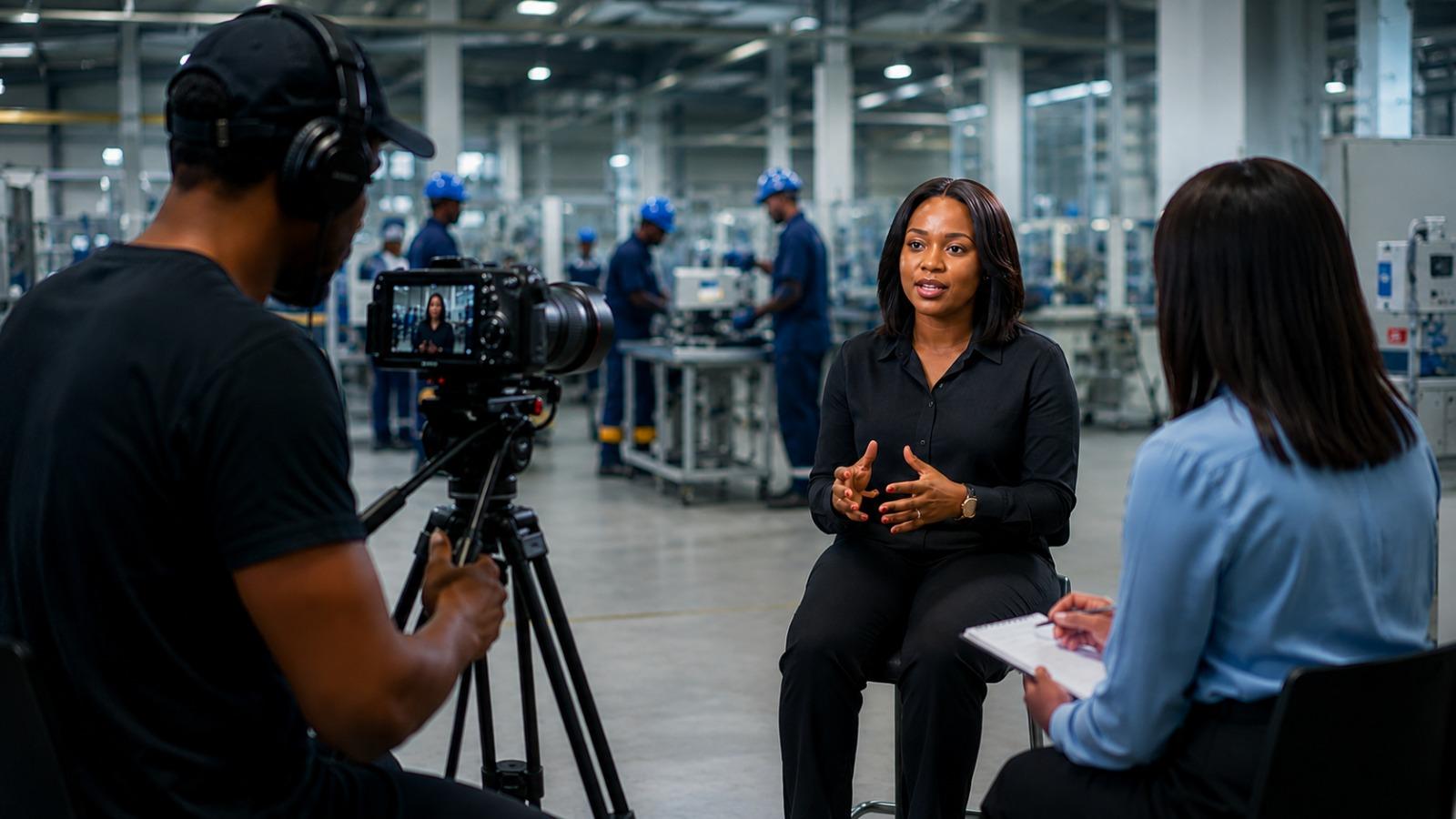
Interviews are important to both company profile videos and corporate documentaries, but they are often used differently.
In a company profile, an executive might explain the organisation's capabilities, products, market position and vision.
In a documentary, that same executive might tell the story of how the organisation began, describe a difficult period or reflect on a defining moment.
The difference is not simply the presence of interviews.
It is the questions being asked and the story being built around the answers.
This is why professional directing and interview preparation matter so much in corporate video production.
A camera can record an executive speaking for an hour. That does not mean you have an effective interview.
The production team needs to understand what information, statements and emotional moments the final film requires before the interview begins.
The best interview is therefore not necessarily the longest one. It is the one that gives the editor the material needed to build a clear and compelling story.
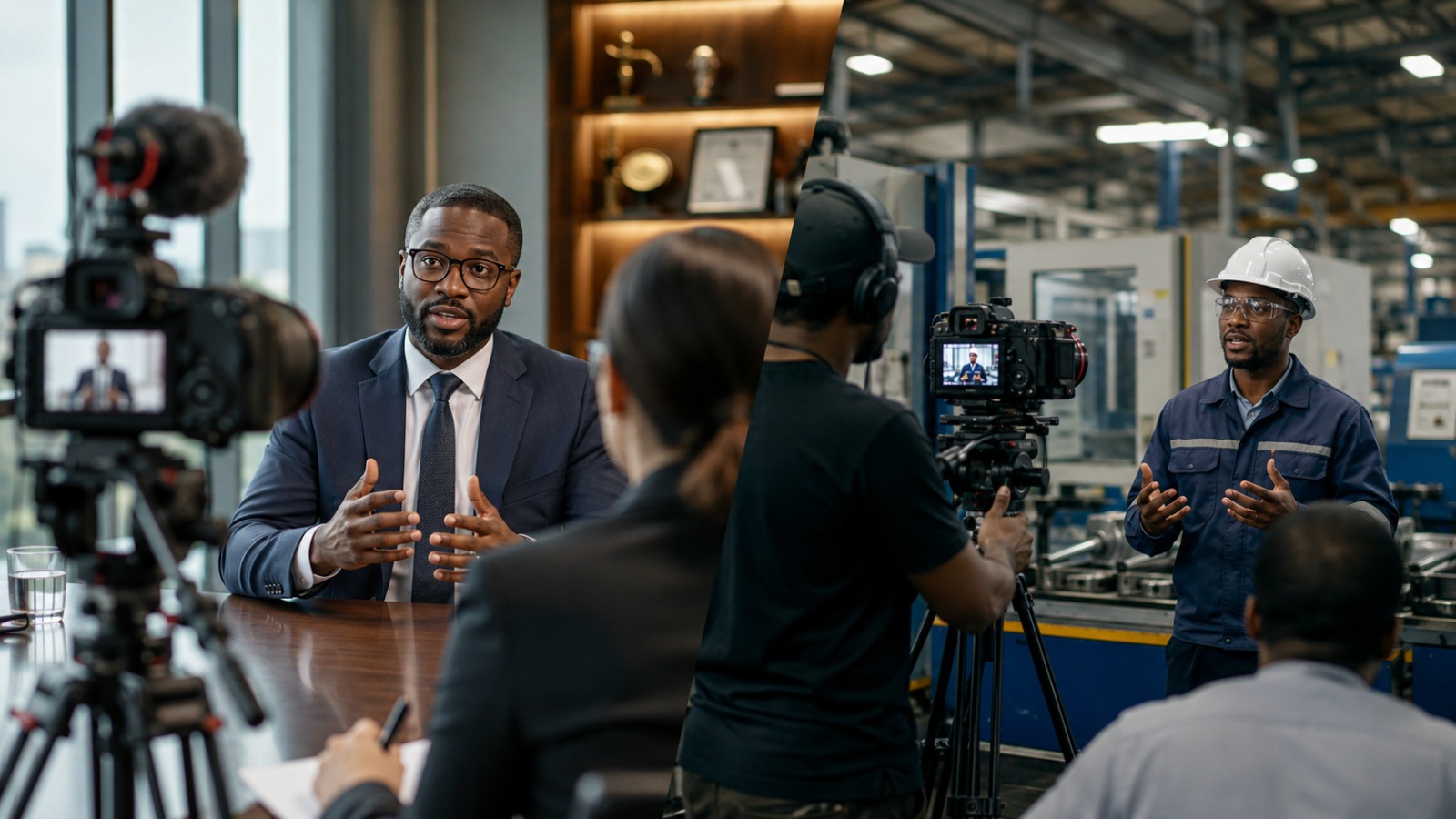
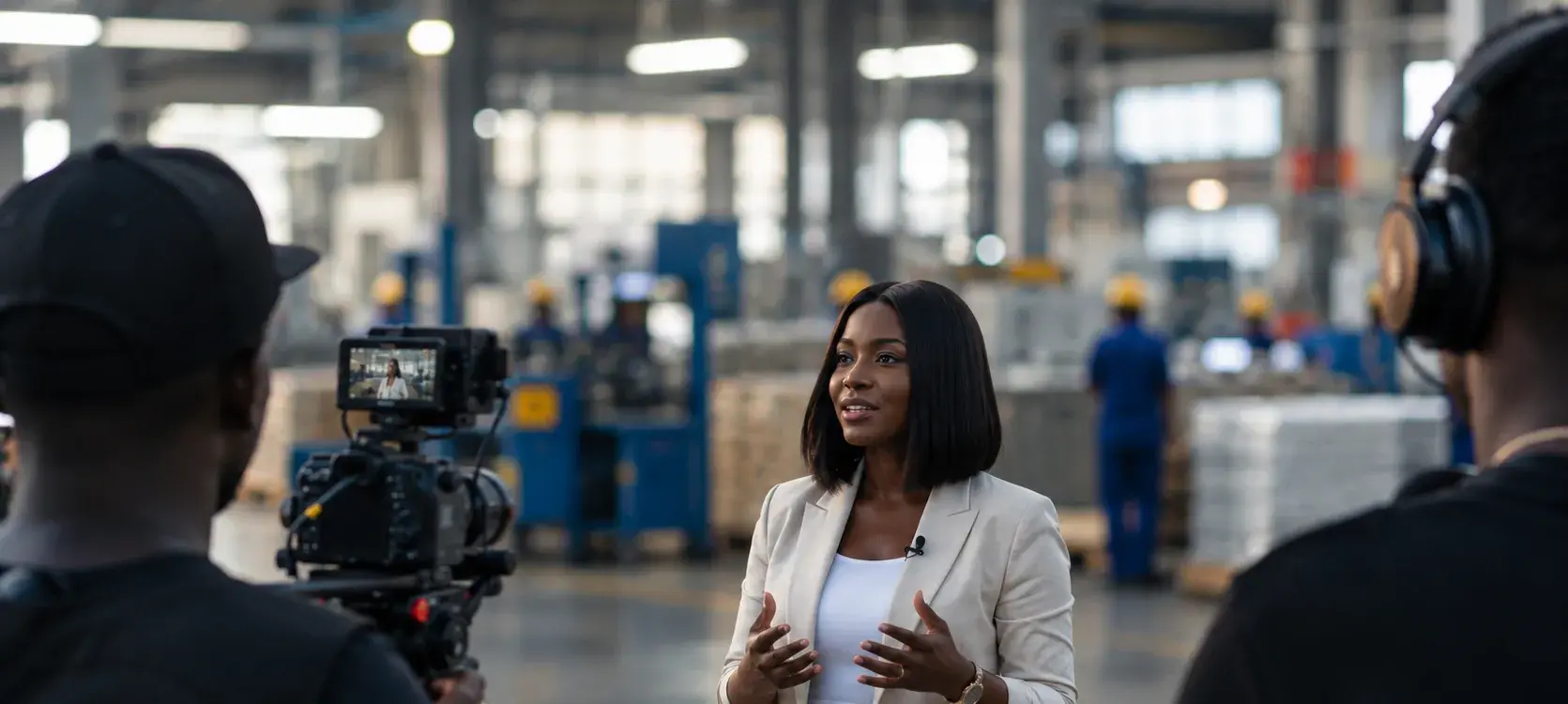
Whether you are producing a company profile or corporate documentary, the supporting footage, commonly referred to as B-roll, is critical.
For a manufacturing company, this could include production lines, machinery, employees at work, quality control, warehousing, product details, logistics and facility exteriors.
For a corporate office, it could show team meetings, client interactions, employees collaborating, leadership, technology and the working environment.
For an agricultural business, it could involve farms, processing, workers, crops, equipment, production facilities and distribution.
The difference is in how those visuals are used.
A company profile might use B-roll to demonstrate capability.
A documentary might use the same footage to advance the story.
The footage therefore needs to be planned around the message rather than captured simply because it looks good.
One of the biggest mistakes businesses make is choosing a video format because they like the visual style of another company's film.
You might see a beautiful cinematic documentary online and think, "That's exactly what we need."
But before making that decision, consider what that film was designed to achieve.
A production can look incredible and still fail to communicate your business effectively.
Your video should be designed around your audience and objectives, not someone else's production.
Cinematic quality is valuable, but cinematic quality without strategic communication is simply attractive footage.
The strongest corporate productions combine both.
Absolutely.
In fact, some of the strongest corporate films sit somewhere between a traditional company profile and a documentary.
You may want the clarity of a company profile combined with the human storytelling of a documentary.
For example, a manufacturing company could introduce its operations and capabilities while using the stories of its founders, employees and customers to give the film emotional depth.
This hybrid approach can be particularly effective when a company needs to communicate both what it does and why its journey matters.
The important thing is to establish that balance during pre-production.
Before contacting a video production company in Lagos, start by identifying who the video is actually for.
Are you speaking to prospective clients, investors, employees, partners, the public or existing stakeholders? The answer will influence the information and tone your production needs.
Next, determine what your audience needs to understand. Do they primarily need to understand your products and capabilities, or do they need to understand your journey, people and impact?
Then define the primary objective. Are you trying to generate business, build credibility, document a milestone, strengthen your brand, support investor communication or explain organisational change?
You should also consider whether your company has a compelling story. Not every organisation needs a documentary. If the strength of your message is primarily in your products, services and capabilities, a company profile may be the better choice.
If your organisation has a meaningful journey, people and experiences that deserve to be explored, documentary storytelling may be more appropriate.
Finally, think about where the video will be used. A website homepage, investor presentation, conference, LinkedIn campaign and anniversary event may all require different versions of the same core production.
That is why distribution should be considered before filming begins.
Regardless of the format you choose, professional production should involve more than simply arriving with cameras.
The process should begin with understanding your business, audience and objectives.
From there, the production team should develop the concept, interview direction, visual approach, locations, production schedule and storytelling structure.
During production, attention should be given to cinematography, lighting, sound recording, directing and the quality of the interviews and B-roll.
Post-production then brings everything together through editing, colour grading, sound design, graphics and finishing.
At Criptonx Studios, we approach corporate video production as a structured communication process, not simply a filming exercise.
Our work includes company profile videos, corporate documentaries, executive interviews, brand films and corporate event videos for organisations looking to communicate their businesses professionally.
If you need to introduce your business, explain your capabilities and position your organisation, a company profile video is likely the better starting point.
If you need to tell a meaningful story about your journey, people, transformation or impact, a corporate documentary may be the stronger choice.
If you need both, a hybrid approach can give you the best of both worlds.
The most important thing is not choosing the format that sounds more impressive.
It is choosing the format that gives your audience the information, context and emotional connection they need.
Your company has a story.
The question is not whether that story should be told. It is how it should be told.
A company profile video can give your audience a clear understanding of your business.
A corporate documentary can help them understand the people, journey and experiences behind it.
And when the two approaches are strategically combined, your corporate film can become a powerful communication asset that continues working for your organisation long after production is complete.
At Criptonx Studios, we help businesses in Lagos and across Nigeria develop professionally produced corporate films that combine strategic storytelling, directing, cinematography and post-production.
If you are unsure whether your project requires a company profile video, corporate documentary or a hybrid approach, we can help you determine the format that best fits your objectives, audience and brand.
Planning your next corporate video? Contact Criptonx Studios to discuss your project and production requirements.
Looking for Corporate Video Production?
Learn More→Corporate Videos
Learn how corporate videos help brands communicate effectively, build trust, and drive engagement across multiple platforms.
Corporate Videos
Explore the different types of corporate videos that can elevate your brand and support your business objectives.
Corporate Videos
Beautiful cinematography, clean audio and polished editing are not enough. Here's why many corporate videos look professional yet leave the audience unsure what the company actually does.
Get video strategies used by top brands in Lagos
Delivered straight to your inbox.

Planning a video project?
Let's help you do it right.