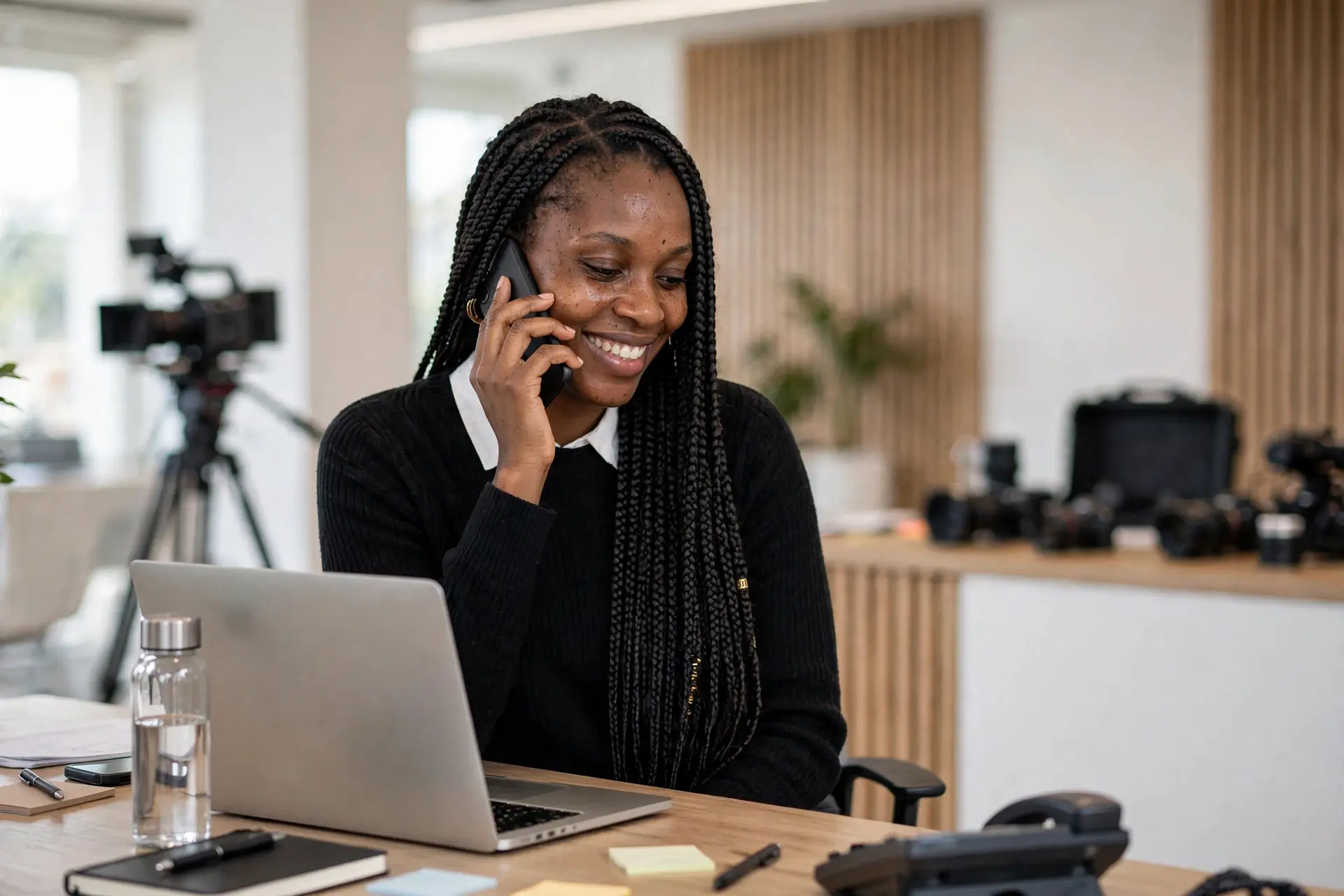
A corporate video can have excellent cinematography, professional lighting, attractive locations and polished editing, but poor audio can still undermine the entire production.
This is one of the easiest things for audiences to notice.
Viewers may not know what camera was used, which lenses were selected or how many lights were on set. But they immediately notice when an executive's voice is difficult to hear, background noise is distracting, dialogue sounds distant, or the sound changes noticeably between different shots.
For organizations investing in professional corporate video production, audio should therefore not be treated as a secondary technical detail.
It is part of the communication.
Whether you are producing a company profile, executive interview, corporate documentary, internal communication video, training film or commercial content, the audience needs to hear the message clearly.
And achieving that requires more than simply attaching a microphone to the camera.
Why Audio Matters So Much in Corporate Video
Corporate videos are often built around communication.
An executive explains the company's vision. A technical expert describes a process. An employee discusses an organization's culture. A customer explains their experience. A narrator provides context.
In many of these situations, the spoken word carries the most important information in the production.
If the audience cannot hear that information clearly, the visual quality cannot compensate for it.
A beautifully framed CEO interview becomes less effective when the voice is buried under air-conditioning noise.
A factory sequence loses value when the interview audio is inconsistent with the supporting footage.
A corporate documentary can feel unfinished when dialogue, music and ambient sound have not been properly balanced.
This is why professional video production requires audio to be considered from the beginning of the project rather than added as an afterthought.
The objective is not simply to record sound.
The objective is to capture usable, consistent and intelligible audio that supports the story.
The Camera Does Not Solve the Audio Problem
One common misconception is that a high-end camera automatically means better sound.
It does not.
Modern cameras can produce exceptional images, but the camera itself does not determine whether an interview will sound professional.
Audio requires its own equipment, positioning, monitoring and recording approach.
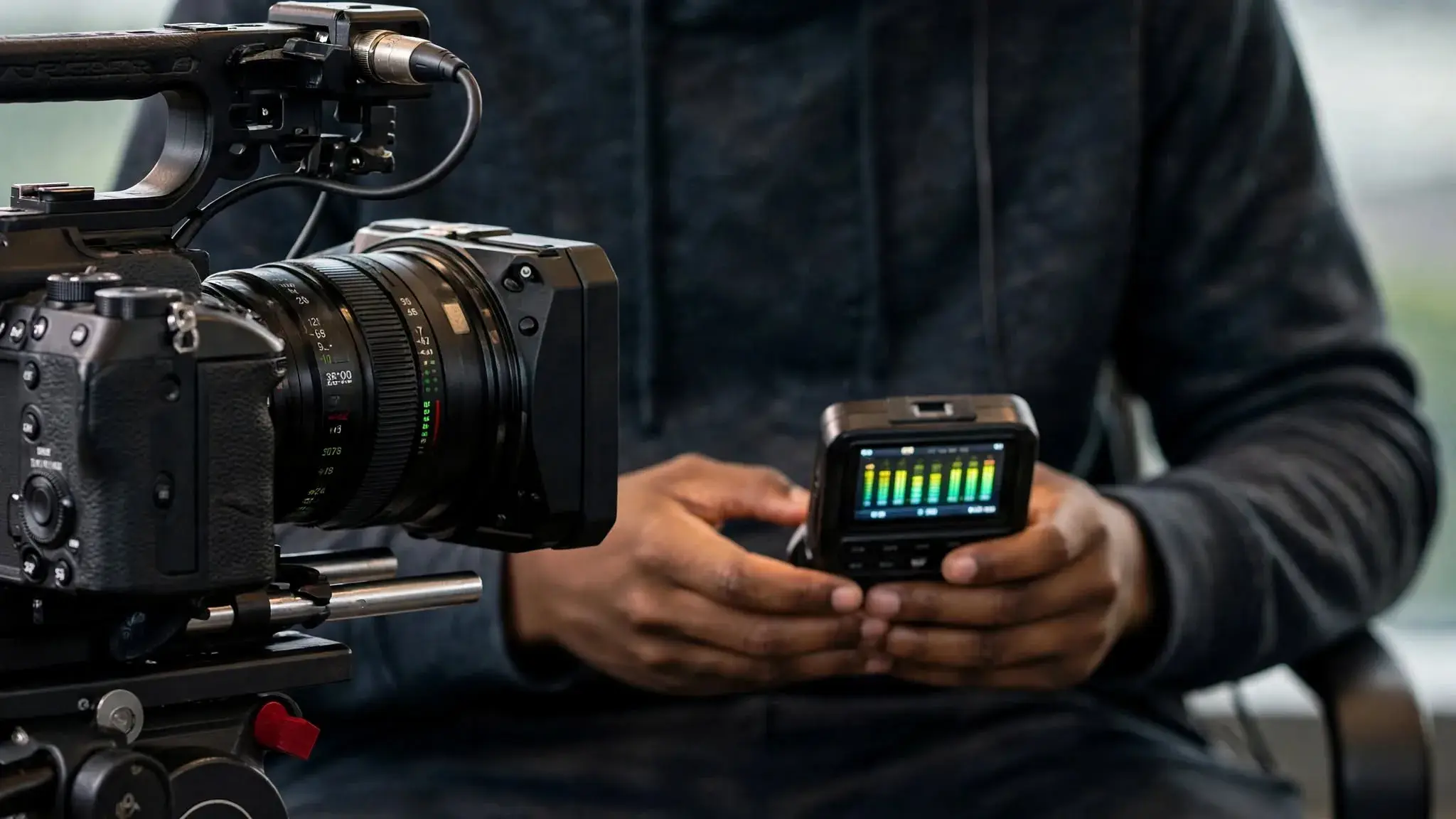
Depending on the production, this may include wireless lavalier microphones, boom microphones, dedicated audio recorders, monitoring headphones, transmitters and receivers, backup recording systems and other accessories.
The correct combination depends on the location, number of people speaking, movement involved and overall production requirements.
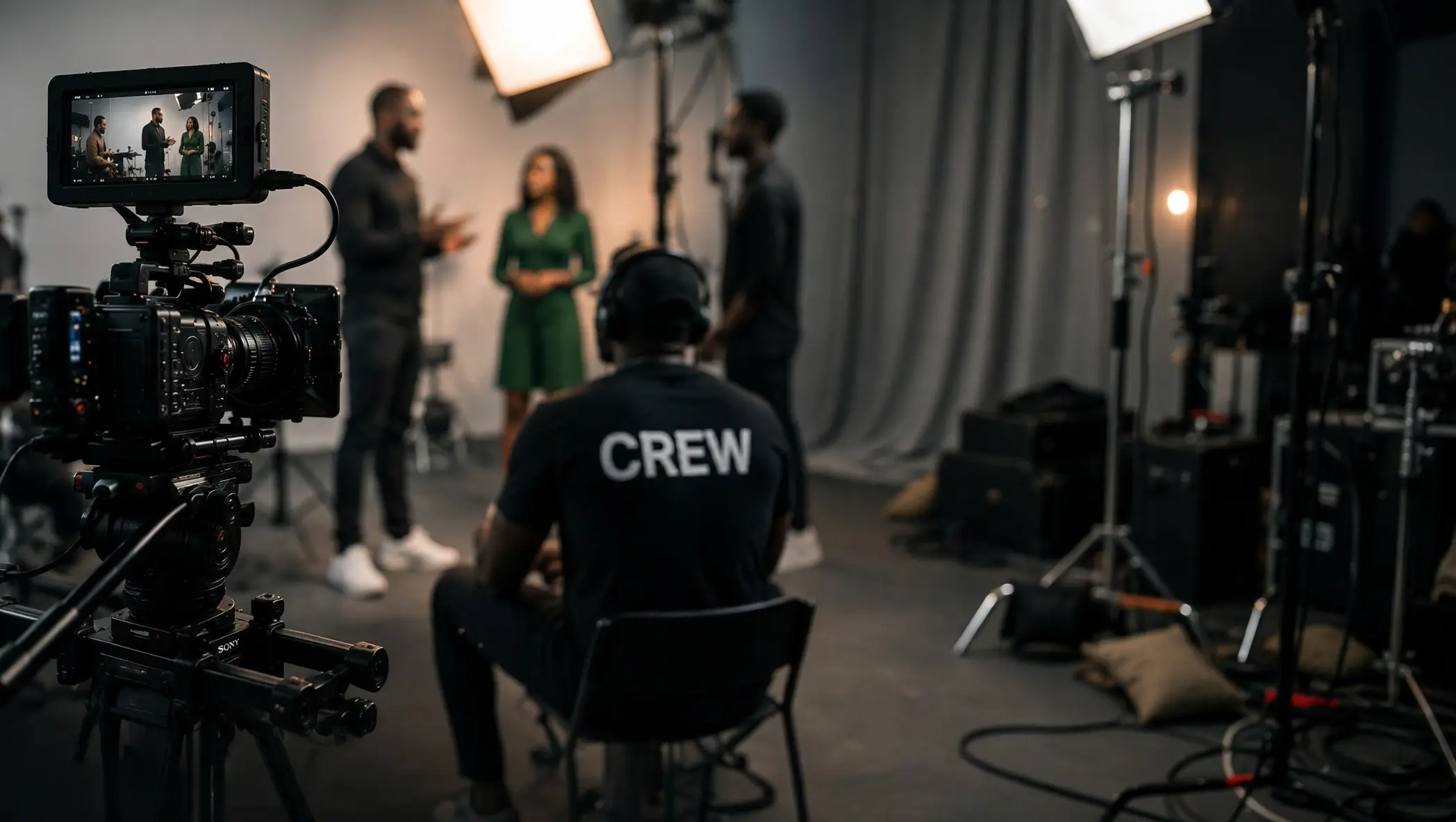
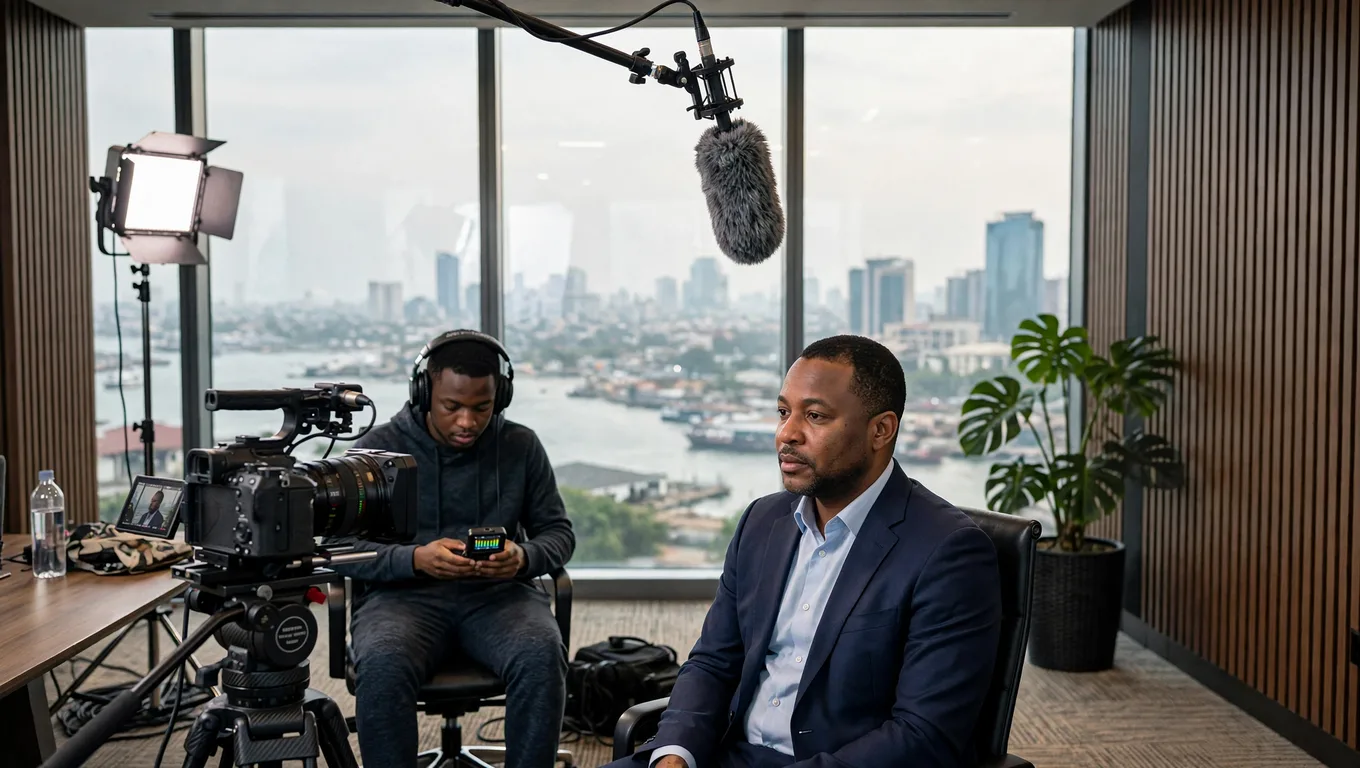
For example, an executive sitting for an interview may be recorded using a carefully positioned lavalier microphone combined with a boom microphone as a secondary source.
A panel discussion may require several microphones.
A corporate event may require audio to be taken directly from the venue's sound system while also recording room ambience and additional microphones for presenters.
A documentary production may require a more flexible combination of microphones because subjects can move between different environments.
The equipment matters, but how it is deployed matters just as much.
The Microphone Needs to Be Close to the Speaker
One of the most important principles in production sound is proximity.
The closer a suitable microphone is to the speaker, the easier it generally becomes to capture a stronger direct signal while reducing the relative level of unwanted environmental sound.
This is why professional productions do not simply rely on the microphone built into the camera.
A camera may be several feet away from the subject.
At that distance, the microphone is also capturing room reflections, air-conditioning, traffic, machinery, conversations and other environmental sounds.
A dedicated microphone positioned appropriately can capture the speaker much more effectively.
This becomes particularly important when filming corporate interviews in offices, factories, hotels, conference rooms and outdoor environments.
The location may look perfect on camera while presenting significant audio challenges.
A production team therefore needs to assess both.
The Location Can Make or Break the Recording
A visually attractive location is not necessarily a good recording environment.
Large rooms can create excessive reflections.
Glass surfaces can make voices sound harsh or reflective.
Air-conditioning systems can introduce continuous low-frequency noise.
Generators, traffic, construction work and nearby conversations can become difficult to remove in post-production.
Factories and industrial facilities can present even greater challenges because machinery may need to remain operational while filming.
This is why location assessment should include sound.
Before an interview begins, the production team should consider questions such as:
Is there constant background noise?
Is the air-conditioning audible?
Are there nearby roads or construction activities?
Does the room create noticeable echoes?
Can unnecessary equipment be switched off temporarily?
Will people be moving around during the interview?
Is there enough separation between the subject and noisy areas?
These decisions can significantly affect the final recording.
In some cases, the best solution is not expensive equipment.
It may simply be choosing a quieter room or changing the position of the interview.
Wireless Microphones Are Useful, But They Are Not Risk-Free
Wireless microphones are extremely useful for corporate production.
They allow executives, presenters and contributors to move naturally without being connected to a recorder by a visible cable.
But wireless does not mean risk-free.
Signal interference, battery failure, poor microphone placement, clothing noise, transmitter problems and other technical issues can affect a recording.
A microphone rubbing against a shirt can create distracting noise.
A transmitter placed incorrectly can affect the quality of the recording.
A depleted battery can create an avoidable production problem.
This is why professional sound recording requires monitoring and preparation.
The sound team should not simply connect a wireless microphone and assume everything is working.
The audio needs to be tested before the important interview or performance begins.
Monitoring Is Different from Simply Recording
One of the most important differences between professional audio recording and casual video production is monitoring.
Recording sound without listening to it creates unnecessary risk.
A microphone can appear to be connected while producing a weak signal.
A cable can develop a fault.
A transmitter can introduce interference.
Clothing can create friction noise.
An air-conditioning system may suddenly become noticeable once the room becomes quiet.
These problems are much easier to address while production is still happening.
Once the subject has left the location and the production has moved on, fixing the problem becomes much more difficult.
Professional audio monitoring therefore allows the production team to identify problems while there is still an opportunity to correct them.
This is particularly important for interviews because an executive may only be available for a limited period.
The goal is to leave the location knowing that the required material has been captured properly.
Backup Audio Can Protect the Production
Important corporate productions should not depend on a single point of failure.
For interviews and other critical recordings, a secondary audio source can provide valuable protection.
This could involve recording through another microphone, using a dedicated recorder, taking a feed from an external sound system, or combining different recording methods depending on the production.
The exact approach depends on the project.
The principle is straightforward:
If the audio is important to the final film, it should be treated as important production data.
A company may spend considerable time preparing an executive, arranging a location and coordinating a production schedule.
Losing a key interview because of an avoidable audio problem can create significant disruption.
Redundancy is therefore part of responsible production planning.
Event Audio Requires a Different Approach
Corporate event video production presents different audio challenges from a controlled interview.
At an event, there may be several speakers, microphones, presentations, audience reactions, music, announcements and environmental sounds happening at the same time.
The production team may also need to work with the venue's existing sound system.
Simply placing a camera near the stage is not enough.
A professional event production may require a direct audio feed from the venue's sound system alongside independent recording of room ambience and other important sound sources.
This helps the final edit capture both the content of the event and the atmosphere of the room.
For conferences, product launches, corporate ceremonies and panel discussions, audio planning should therefore happen before the event begins.
The production team needs to understand the programme, speaker arrangements, microphone configuration, venue sound system and expected deliverables.
This allows the recording approach to be designed around the event rather than improvised during it.
Good Sound Is More Than Clear Dialogue
Audio production is not only about making voices audible.
The finished soundtrack also needs to feel balanced.
Dialogue, music, ambient sound, sound effects and other audio elements should work together without competing for attention.
For example, music underneath an executive interview should support the message without making the dialogue difficult to understand.
Ambient sound can help establish a sense of place.
The sound of machinery can reinforce a manufacturing sequence.
Natural office activity can make a workplace feel authentic.
Audience reactions can add energy to an event film.
These elements can be subtle, but they contribute to how the audience experiences the finished production.
This is where sound design becomes important.
The purpose is not to add sound simply because the soundtrack feels empty.
It is to use sound intentionally to support the visual story.
Post-Production Cannot Fix Everything
Modern post-production tools can remove certain types of unwanted noise, improve dialogue, balance levels and enhance recordings.
But there are limits.
Severe distortion, clipped recordings, heavy interference, extreme background noise or poorly captured dialogue may not be completely recoverable.
This is an important distinction.
Post-production should refine good production audio.
It should not be expected to rescue fundamentally unusable recordings.
The strongest results come when production sound is captured properly in the first place and post-production is then used to clean, balance and finish it.
This is one reason professional audio recording should be treated as part of the production itself rather than something that happens only during editing.
Audio Consistency Matters Across the Entire Film
A corporate video may include several interviews recorded in different locations.
One executive may be interviewed in an office.
Another may be filmed inside a factory.
A third may be recorded outdoors.
If each recording has a significantly different sound quality, the final video can feel inconsistent.
The audience may notice differences in volume, room tone, microphone quality or background noise even when the transitions are visually smooth.
Maintaining consistency therefore requires planning.
The production team should consider microphone selection, recording levels, room conditions and the overall audio approach across the different locations.
During post-production, dialogue can then be edited and mixed to create a more consistent listening experience.
The objective is for the audience to focus on the content rather than noticing technical differences between sections.
What Corporate Teams Should Consider Before Production
Businesses commissioning a corporate video should not necessarily need to understand every technical detail of production.
But there are several useful questions worth asking before the shoot.
How will the interviews be recorded?
Will there be dedicated sound recording?
How will the production handle noisy locations?
Will backup audio be captured for important interviews?
How will event sound be recorded?
Will the final production include sound design and professional audio mixing?
These questions help establish whether audio has been properly considered within the production plan.
A quotation that lists several cameras and expensive lenses but says little about sound may not provide the full picture of what is required.
The production should be evaluated as a complete system.
Camera, lighting, sound, directing, production design, editing and finishing all contribute to the result.
The Right Audio Setup Depends on the Production
There is no single audio setup that is appropriate for every video.
A simple executive interview may require a different approach from a multi-person panel.
A factory documentary may require different equipment from a studio production.
A corporate conference may require several independent audio sources.
An outdoor interview may require additional protection against wind and environmental noise.
This is why equipment decisions should follow the production requirements.
More equipment is not automatically better.
The objective is to use the right microphones, recording systems, monitoring and crew for the environment and the intended deliverables.
This is also where experienced production planning becomes important.
The audio team should understand what the final film requires before deciding how the sound will be captured.
Audio Should Be Part of the Production Plan from the Beginning
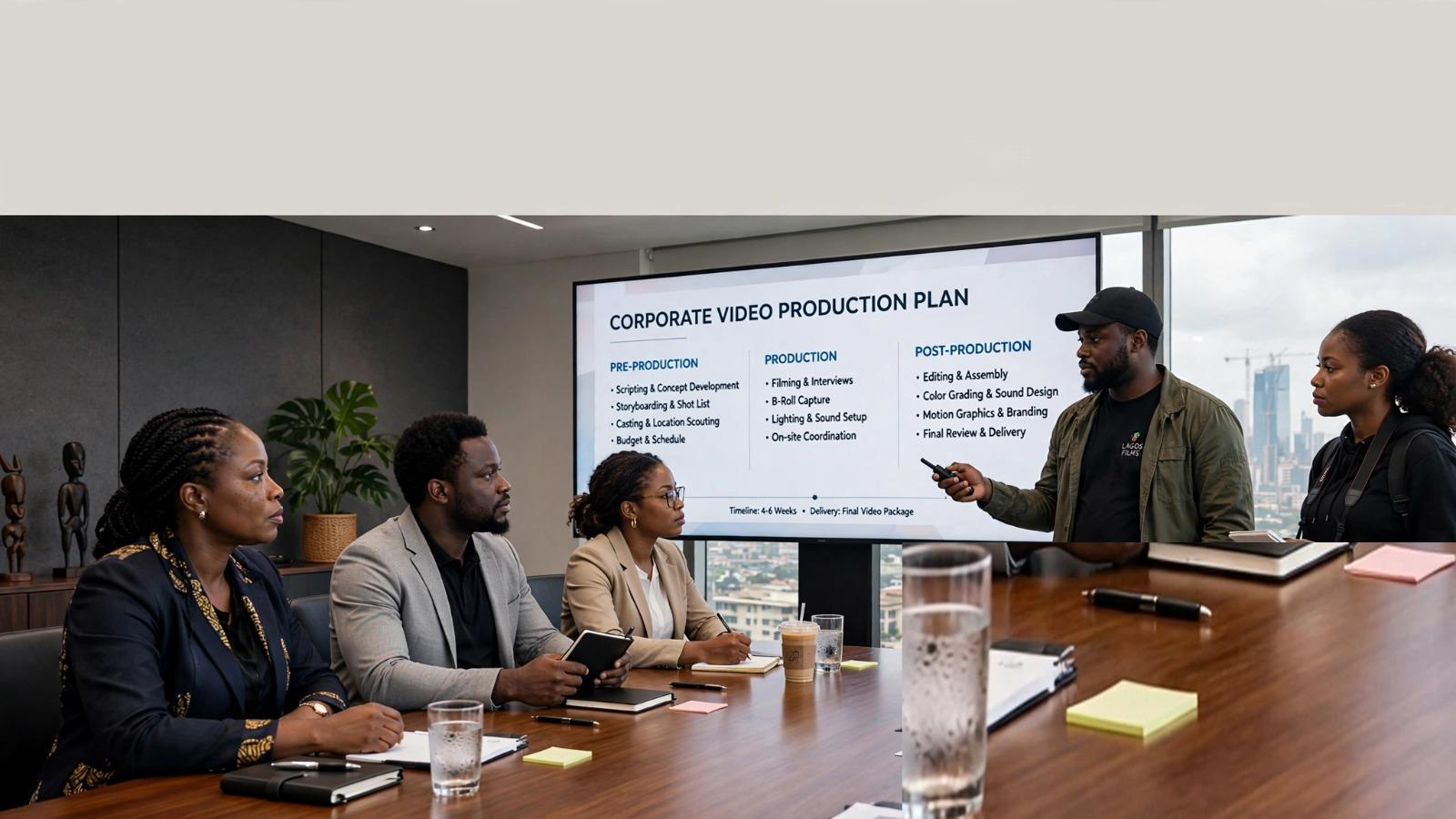
Good corporate video production is a coordinated process.
The creative concept affects the locations.
The locations affect the lighting and sound.
The interview structure affects the recording requirements.
The number of contributors affects the microphone setup.
The final deliverables affect how material needs to be captured and organized.
This means audio cannot be treated as an isolated department.
It needs to be considered alongside the creative direction, production schedule, locations, crew and post-production requirements.
When this happens, the production team can identify potential problems before filming rather than discovering them during the edit.
That is the difference between simply recording sound and planning production sound.
Final Thoughts
A corporate video is ultimately a communication tool.
The audience needs to see the organization clearly, but they also need to hear its people, understand its message and experience the story without unnecessary technical distractions.
Good audio does not necessarily draw attention to itself.
In many cases, its success is precisely that the audience does not have to think about it.
The executive sounds clear.
The presentation is easy to follow.
The interview feels natural.
The music supports the message.
The environment feels believable.
The transitions between different sections feel consistent.
Achieving that requires proper planning, appropriate equipment, careful microphone placement, monitoring, backup recording where necessary, and professional post-production.
At Criptonx Studios, we approach sound as an essential part of the production process. Our corporate video productions combine professional audio recording with structured production planning, cinematography, lighting and post-production to ensure that the finished film communicates clearly.
For organizations producing corporate videos in Lagos and across Nigeria, the question should not only be, "What camera will you use?"
It should also be:
"How will you make sure our audience hears the message properly?"
That is where professional production begins.
Planning a Corporate Video?
If your organization is considering a corporate video production in Lagos or anywhere in Nigeria, Criptonx Studios can help you determine the appropriate production approach based on your objectives, locations, contributors, timeline and intended use.
Discuss your corporate video project with Criptonx Studios — corporate video production, Lagos, Nigeria.